Proper product identification is an essential part of the manufacturing process. Information such as batch numbers, production dates, expiry dates, serial numbers, and traceability codes allows products to be identified and tracked throughout the production, distribution, and supply chain.
For manufacturers, ensuring that this information is applied accurately, consistently, clearly, and appropriately for each product is essential for maintaining production control and supporting traceability.
But how can manufacturers ensure that every product leaving the production line carries the correct identification?
The answer starts with understanding which information is required and selecting the right Coding & Marking technology to apply it.
1. What Does Proper Product Identification Mean?
Product identification involves applying information that allows a product to be recognized and tracked throughout the different stages of the supply chain.
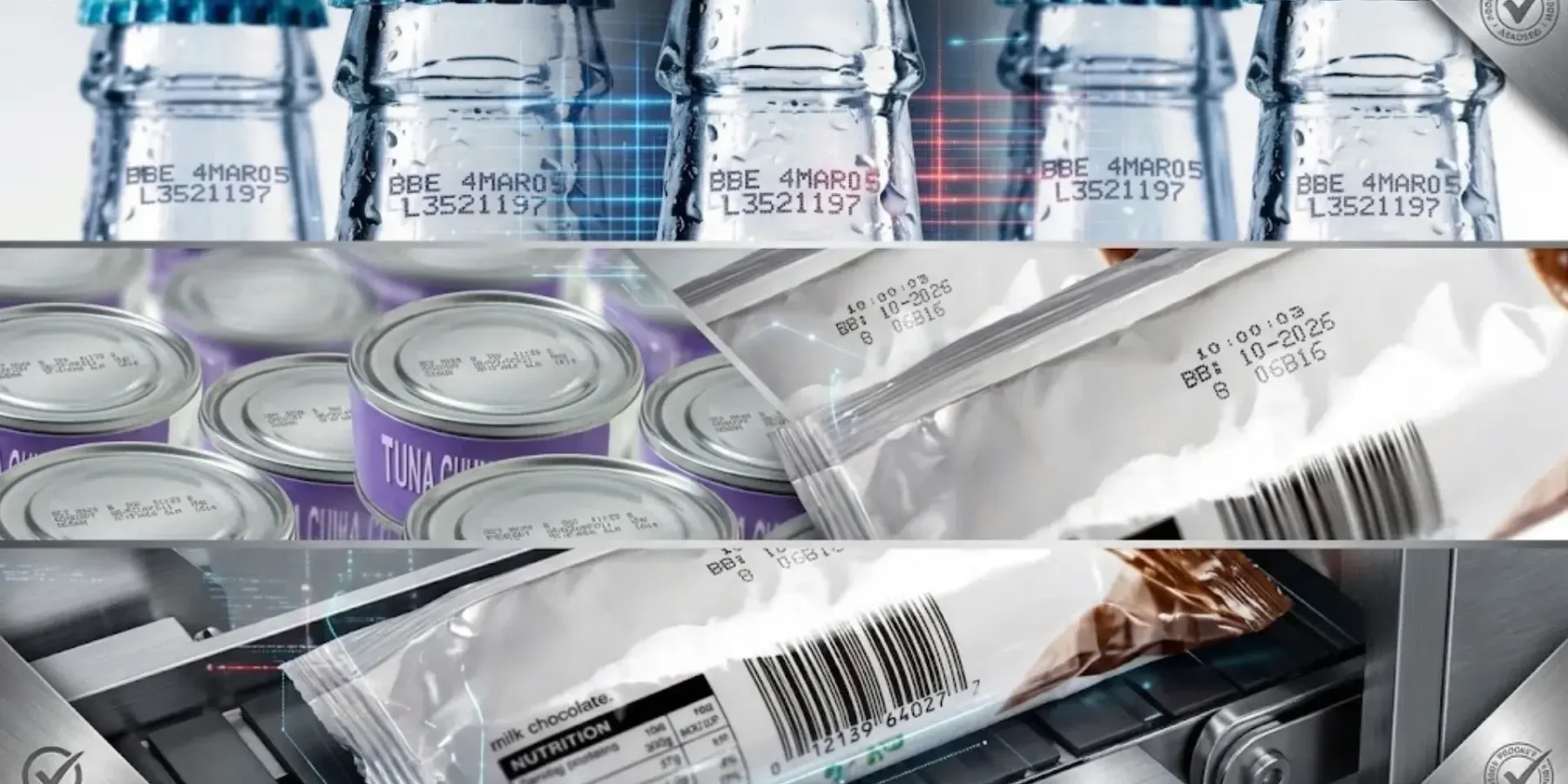
Depending on the industry, product, and applicable requirements, identification may include:
- Product code or reference;
- Batch or lot number;
- Production date;
- Expiry date or best-before date;
- Serial number;
- Barcodes;
- 2D codes;
- Other information required for traceability.
Together, this information makes it possible to link a product to its production process and, when necessary, identify and track a specific batch or individual unit.
2. Legibility Is Just as Important as the Information
Having the correct information is not enough if the code cannot be read.
The marking must provide adequate contrast, definition, and positioning, according to the type of packaging and the conditions of the production line.
A poorly visible, blurred, or partially damaged code can make manual or automated reading difficult and compromise quality control and traceability processes.
That is why print quality must be considered from the selection of the technology through to the configuration of the equipment.
3. Choose the Right Coding & Marking Technology
Not all products and production lines have the same requirements. Packaging material, line speed, available printing space, and the type of information to be applied are some of the factors that should be considered.
CIJ — Continuous Inkjet
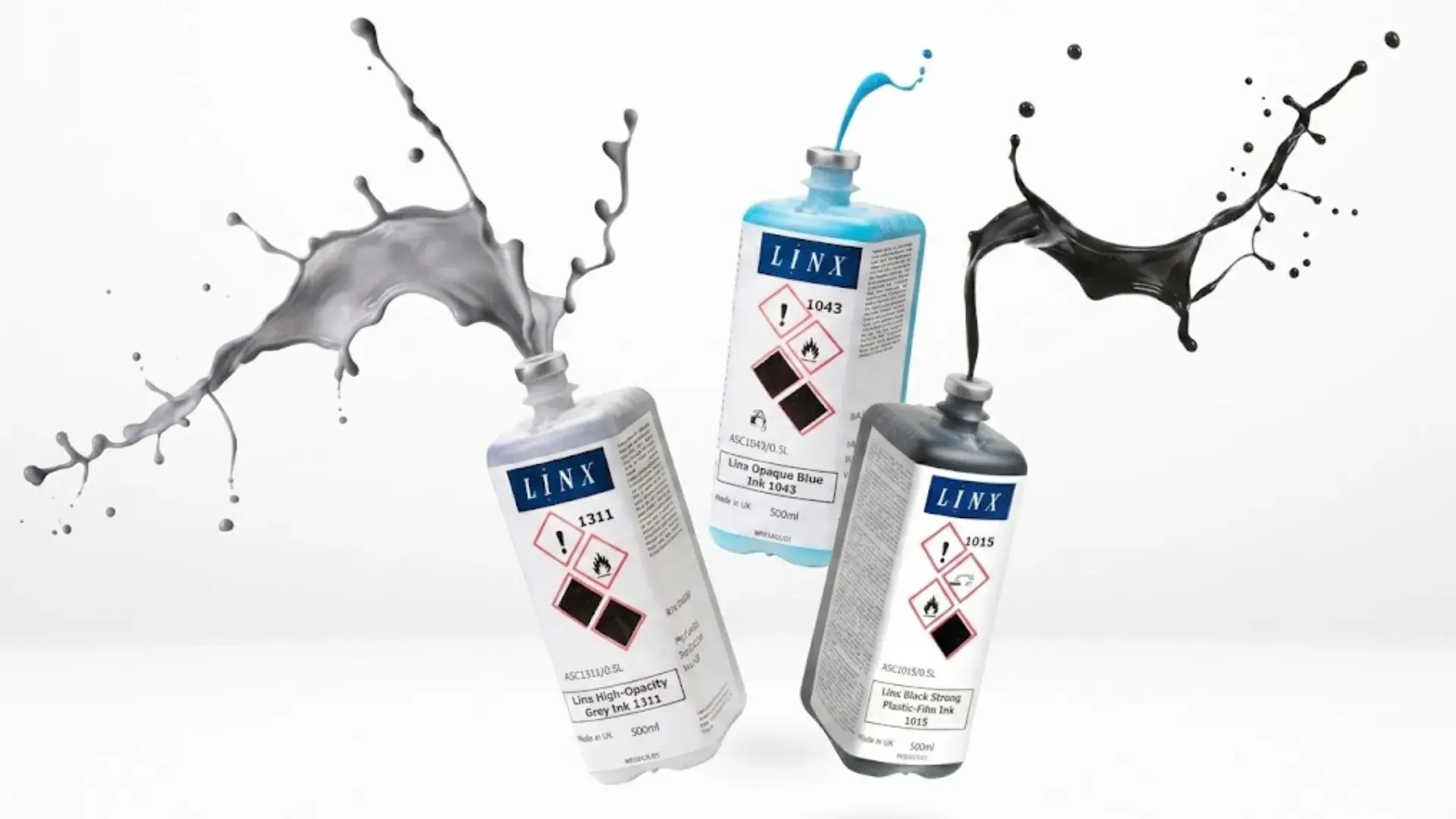
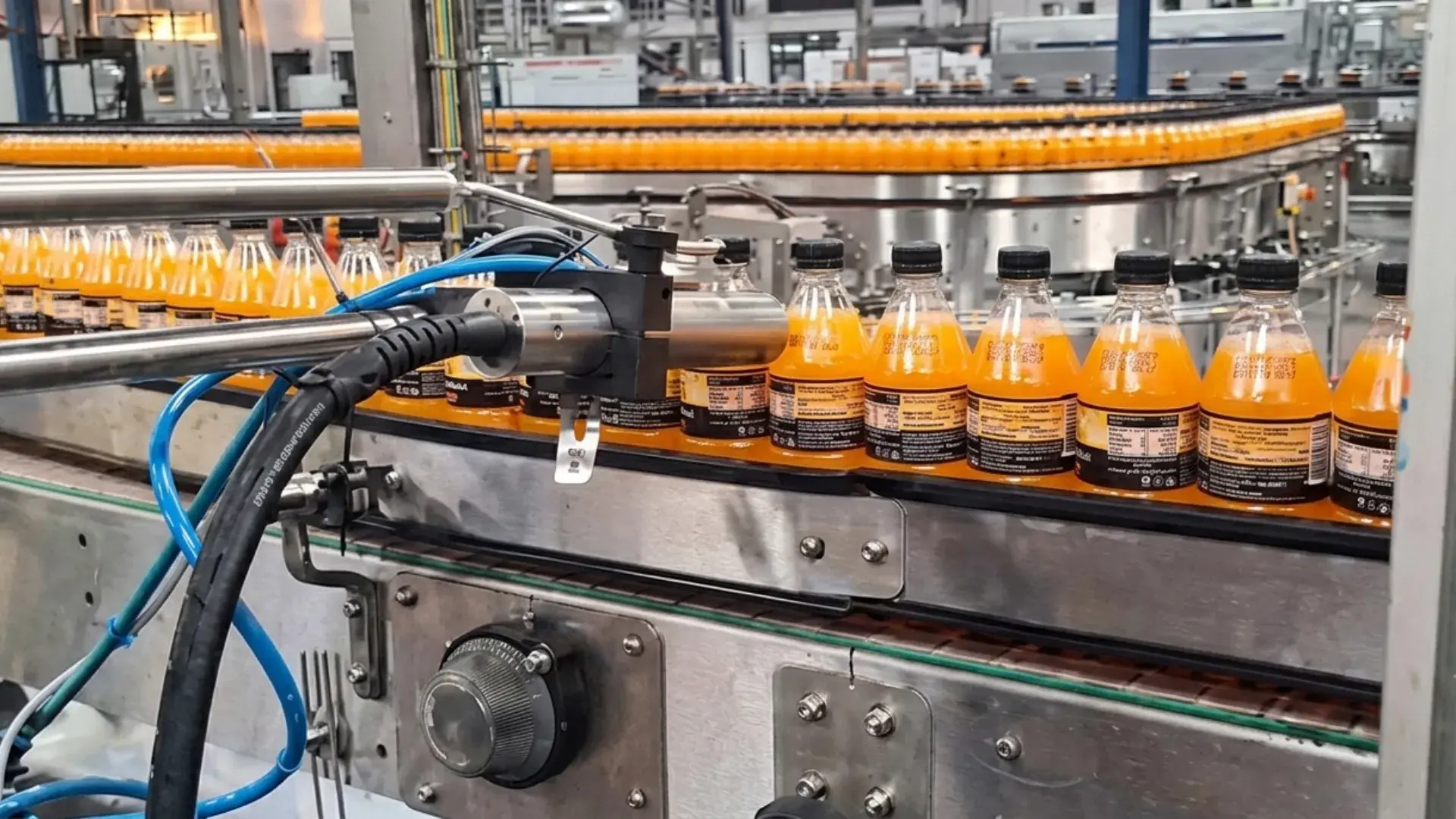
CIJ technology is widely used for printing variable information such as batch numbers, dates, codes, and production references.
It is suitable for different types of surfaces and applications, particularly on high-speed production lines.
Laser
Laser marking can create permanent marks directly on certain materials.
It can be an effective option when durable and resistant marking is required, depending on the substrate and application.
TIJ — Thermal Inkjet
TIJ technology provides high-resolution printing of text, codes, and other information.
It is particularly suitable for applications that require sharp, detailed printing on different types of compatible packaging and surfaces.
4. Avoid Errors That Can Compromise Product Identification
Some coding problems may seem minor, but they can significantly affect product traceability.
Common issues include:
- Incorrect batch or date information;
- Poorly legible codes;
- Insufficient contrast;
- Incorrect print positioning;
- Incorrect equipment configuration;
- Lack of synchronization between the production system and the coding equipment;
- Selecting the wrong technology for the packaging material;
- Failure to verify the printed information.
Reducing these risks requires not only the right equipment but also well-defined production procedures.
5. Coding Should Be Integrated into the Production Process
An efficient identification system should not be viewed simply as a printer installed at the end of a production line.
The information needs to be correctly defined, transferred to the equipment, printed, and, where applicable, verified.
A coding workflow may involve:
Product Information → Code Generation → Printing → Verification → Traceability
The greater the level of automation and control, the less dependent the process becomes on manual procedures that can lead to errors.
6. What Should You Consider Before Choosing a Solution?
Before selecting a Coding & Marking technology, it is important to analyze the specific characteristics of the production process.
Some key questions include:
What is the packaging material?
Plastic, glass, metal, cardboard, and other substrates may require different technologies or equipment configurations.
What is the production line speed?
The solution must keep up with production without compromising print quality.
What information needs to be printed?
A simple date and batch number have different requirements from a 2D code or multiple lines of information.
Does the marking need to be permanent?
For some applications, marking durability and resistance are critical factors.
Where will the marking be applied?
Available space, package orientation, and print location can also influence the choice of technology.
7. Product Identification and Traceability Go Hand in Hand
Proper identification directly contributes to traceability.
When every product or batch carries clear and consistent information, it becomes easier to track its movement and identify the source of potential issues.
This can be particularly important when investigating specific batches, managing quality control processes, or carrying out product recalls.
For this reason, coding should not be viewed simply as an operational step. It is part of a manufacturer’s overall production control and traceability system.
8. How Can Mark Xtra Support Your Production?
Every production line has specific requirements. Therefore, the choice of Coding & Marking technology should take into account the product, packaging material, production speed, and the information that needs to be applied.
Mark Xtra — Coding & Marking Solutions provides CIJ, Laser, and TIJ solutions, helping manufacturers find technologies suited to their product identification and industrial marking needs.
From printing dates and batch numbers to codes and other traceability information, the right solution can contribute to more consistent identification and a more controlled production process.
Conclusion
Complying with product identification requirements involves much more than simply printing a date or code on a package.
Manufacturers need to ensure that the correct information is generated, applied, readable, and suitable for the production process.
Choosing the right Coding & Marking technology should therefore be part of every manufacturer’s strategy for quality, production control, and traceability.
Does your production line need a product identification and marking solution?
Mark Xtra — Coding & Marking Solutions.
Find the right technology for your production.